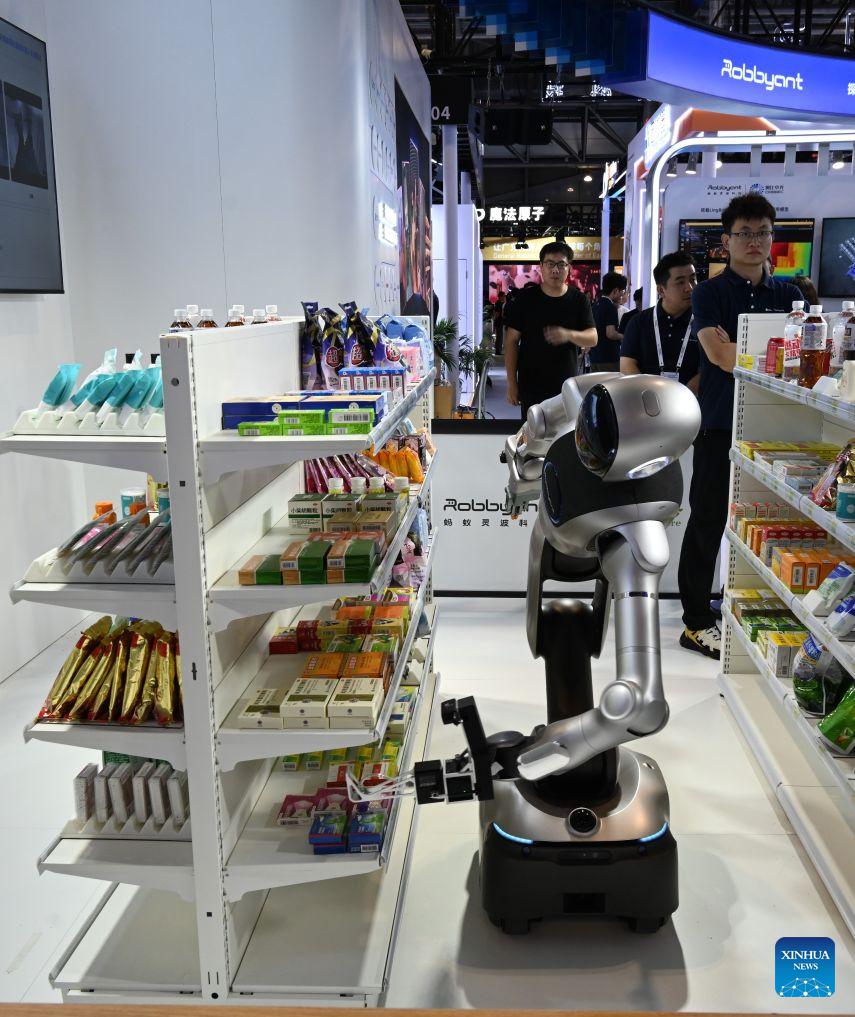
Stepping into the dynamic exhibition halls of the 2026 World Artificial Intelligence Conference in Shanghai reveals a massive leap forward for general embodied AI. With over 200 providers showcasing general-purpose intelligence systems designed to adapt across variable operational scenarios, the robotics landscape is rapidly transitioning from experimental laboratory prototypes to practical commercial solutions. When you observe advanced humanoid robots and robotic arms executing precise precision operations—such as fetching medicine, sorting heavy packages, and loading washing machines—it becomes evident that multi-task adaptability and fine motor control are redefining modern automation standards. As highlighted by People's Daily, these breakthroughs mark an essential shift toward real-world deployment in everyday industrial and service environments.
Delving into the technical framework, these embodied AI platforms rely heavily on sophisticated vision-language models, edge computing capacity, and real-time sensor integration to process complex physical environments with minimal latency. Modern enterprises are demanding robotic systems capable of handling a broad spectrum of dynamic tasks, while simultaneously maintaining strict safety guardrails, high load-bearing efficiency, and long operational lifespans. By leveraging unified operating systems and distributed intelligence architectures, developers can significantly shorten training cycles and improve cross-scenario execution rates. Integrating these versatile robots into existing logistics, healthcare, and retail workflows not only drives down operational overhead and labor expenses, but also maximizes the long-term return on investment for businesses adopting digital transformation strategies.
Looking forward, the primary hurdles for large-scale commercialization will involve standardizing hardware components, optimizing power consumption, and scaling high-quality training datasets for complex physical tasks. To maintain steady industry growth and navigate fluctuating market demands, continuous collaboration between AI software developers and hardware manufacturers will be essential for refining robotic dexterity and reliability. Ultimately, bridging the gap between sophisticated algorithmic research and cost-effective, plug-and-play commercial hardware will dictate how quickly embodied AI becomes a standard pillar of the global digital economy over the next 12 to 36 months.
News source: https://peoplesdaily.pdnews.cn/china/er/30052702537