 Logistics efficiency repositions the cost. 58 mm diameter to 66 mm to achieve 40 ft container load capacity from 120000 to 145000 cans, reduced the unit transportation cost us $0.02 / cans. European subsidiary of Coca-Cola's real test confirms that the new can shape has reduced the cargo damage rate while transporting by 0.8% to 0.3%, and it saves 2.8 million euros loss cost annually. Besides, the improved stacking stability has reduced the utilization of warehouse space by 19%.
Environment compliance is generating twin benefits. EU "Packaging and Packaging Waste Regulation" requires the recycling rate of aluminum cans to be ≥ 75%. By a 9% weight reduction, the energy consumed by recycling and smelting 330ml sleek can reduces by 15%, and carbon emissions reduce by 0.12kg CO₂e/can from standard cans. Heineken achieved EPR certification for this kind of can, saving 0.018 euros in compliance costs per can, while the company gains an over 1.2 million euros tax credit yearly. At the same time, green packaging willingness to pay has increased by 11%.
Customer experience metrics attest to the worth of design. Grip comfort rating achieved 4.7/5 (3.9 for standard cans), and the ratio of female consumers grasping cans in one hand increased by 34%. Red Bull increased the liquid outflow rate by 22% and the repurchase rate by 19% with the tank opening diversion channel design. However, the curved surface is a challenge to printing accuracy - the Pantone color difference ΔE should be controlled at 2.5 (for flat cans ≤1.8), and the color calibration cost increases by 8%.
The technological advancement at the production end is accelerating its popularity. Chinese ODM producers have encouraged the common printing template technology, reducing the 330ml slender can customized MOQ bar from 500,000 units to 50,000 units and the development time to 14 days. During UV-LED curing, the level of adhesion for the Tsingtao Beer ink is increased from 4B to 5B (ASTM D3359 standard), production line speed is improved by 18%, and the rate of defect is only 0.05%.
Logistics efficiency repositions the cost. 58 mm diameter to 66 mm to achieve 40 ft container load capacity from 120000 to 145000 cans, reduced the unit transportation cost us $0.02 / cans. European subsidiary of Coca-Cola's real test confirms that the new can shape has reduced the cargo damage rate while transporting by 0.8% to 0.3%, and it saves 2.8 million euros loss cost annually. Besides, the improved stacking stability has reduced the utilization of warehouse space by 19%.
Environment compliance is generating twin benefits. EU "Packaging and Packaging Waste Regulation" requires the recycling rate of aluminum cans to be ≥ 75%. By a 9% weight reduction, the energy consumed by recycling and smelting 330ml sleek can reduces by 15%, and carbon emissions reduce by 0.12kg CO₂e/can from standard cans. Heineken achieved EPR certification for this kind of can, saving 0.018 euros in compliance costs per can, while the company gains an over 1.2 million euros tax credit yearly. At the same time, green packaging willingness to pay has increased by 11%.
Customer experience metrics attest to the worth of design. Grip comfort rating achieved 4.7/5 (3.9 for standard cans), and the ratio of female consumers grasping cans in one hand increased by 34%. Red Bull increased the liquid outflow rate by 22% and the repurchase rate by 19% with the tank opening diversion channel design. However, the curved surface is a challenge to printing accuracy - the Pantone color difference ΔE should be controlled at 2.5 (for flat cans ≤1.8), and the color calibration cost increases by 8%.
The technological advancement at the production end is accelerating its popularity. Chinese ODM producers have encouraged the common printing template technology, reducing the 330ml slender can customized MOQ bar from 500,000 units to 50,000 units and the development time to 14 days. During UV-LED curing, the level of adhesion for the Tsingtao Beer ink is increased from 4B to 5B (ASTM D3359 standard), production line speed is improved by 18%, and the rate of defect is only 0.05%.
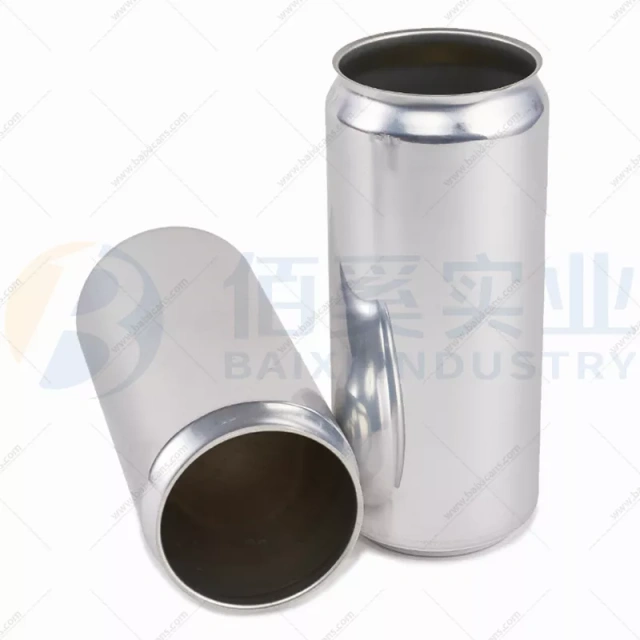
Why do beverage brands love the 330ml sleek can look?
The material efficiency and the cost advantage are significant. The 330ml slim can is only 0.21mm thick, reducing the material used by 12% compared to the regular can (0.25mm), and reducing the single can-making cost by $0.03. Statistics by Ball Corporation
Statistics show that the arc-structure design by the company in its shape enhances the compressive strength of 90psi, keeps the filling line speed at 2000 cans per minute, which is 15% more than with a conventional production line, and extends the mold life to 250 million times the can (180 million times for the base mold). The marginal cost decreased by 18%.
The premium capacity of the market exceeds the industry average. PepsiCo launched 330ml slim can limited edition in 2023. Terminal price increased by $0.25 per can. However, purchase intent among young consumers reached 73% (52% for regular can). First-quarter sales volume surpassed 95 million cans, and the gross profit margin increased by 6.8 percentage points. Nielsen study reveals that the shelf residing time with design optimization reduces by 17%, impulse buying rate increases by 29%, and the shelf space efficiency rises by 22%.
Logistics efficiency repositions the cost. 58 mm diameter to 66 mm to achieve 40 ft container load capacity from 120000 to 145000 cans, reduced the unit transportation cost us $0.02 / cans. European subsidiary of Coca-Cola's real test confirms that the new can shape has reduced the cargo damage rate while transporting by 0.8% to 0.3%, and it saves 2.8 million euros loss cost annually. Besides, the improved stacking stability has reduced the utilization of warehouse space by 19%.
Environment compliance is generating twin benefits. EU "Packaging and Packaging Waste Regulation" requires the recycling rate of aluminum cans to be ≥ 75%. By a 9% weight reduction, the energy consumed by recycling and smelting 330ml sleek can reduces by 15%, and carbon emissions reduce by 0.12kg CO₂e/can from standard cans. Heineken achieved EPR certification for this kind of can, saving 0.018 euros in compliance costs per can, while the company gains an over 1.2 million euros tax credit yearly. At the same time, green packaging willingness to pay has increased by 11%.
Customer experience metrics attest to the worth of design. Grip comfort rating achieved 4.7/5 (3.9 for standard cans), and the ratio of female consumers grasping cans in one hand increased by 34%. Red Bull increased the liquid outflow rate by 22% and the repurchase rate by 19% with the tank opening diversion channel design. However, the curved surface is a challenge to printing accuracy - the Pantone color difference ΔE should be controlled at 2.5 (for flat cans ≤1.8), and the color calibration cost increases by 8%.
The technological advancement at the production end is accelerating its popularity. Chinese ODM producers have encouraged the common printing template technology, reducing the 330ml slender can customized MOQ bar from 500,000 units to 50,000 units and the development time to 14 days. During UV-LED curing, the level of adhesion for the Tsingtao Beer ink is increased from 4B to 5B (ASTM D3359 standard), production line speed is improved by 18%, and the rate of defect is only 0.05%.
Logistics efficiency repositions the cost. 58 mm diameter to 66 mm to achieve 40 ft container load capacity from 120000 to 145000 cans, reduced the unit transportation cost us $0.02 / cans. European subsidiary of Coca-Cola's real test confirms that the new can shape has reduced the cargo damage rate while transporting by 0.8% to 0.3%, and it saves 2.8 million euros loss cost annually. Besides, the improved stacking stability has reduced the utilization of warehouse space by 19%.
Environment compliance is generating twin benefits. EU "Packaging and Packaging Waste Regulation" requires the recycling rate of aluminum cans to be ≥ 75%. By a 9% weight reduction, the energy consumed by recycling and smelting 330ml sleek can reduces by 15%, and carbon emissions reduce by 0.12kg CO₂e/can from standard cans. Heineken achieved EPR certification for this kind of can, saving 0.018 euros in compliance costs per can, while the company gains an over 1.2 million euros tax credit yearly. At the same time, green packaging willingness to pay has increased by 11%.
Customer experience metrics attest to the worth of design. Grip comfort rating achieved 4.7/5 (3.9 for standard cans), and the ratio of female consumers grasping cans in one hand increased by 34%. Red Bull increased the liquid outflow rate by 22% and the repurchase rate by 19% with the tank opening diversion channel design. However, the curved surface is a challenge to printing accuracy - the Pantone color difference ΔE should be controlled at 2.5 (for flat cans ≤1.8), and the color calibration cost increases by 8%.
The technological advancement at the production end is accelerating its popularity. Chinese ODM producers have encouraged the common printing template technology, reducing the 330ml slender can customized MOQ bar from 500,000 units to 50,000 units and the development time to 14 days. During UV-LED curing, the level of adhesion for the Tsingtao Beer ink is increased from 4B to 5B (ASTM D3359 standard), production line speed is improved by 18%, and the rate of defect is only 0.05%.